
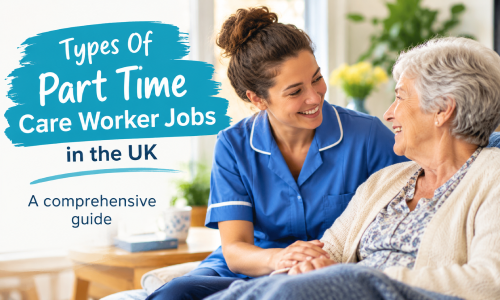
Have you ever considered part time work in the care industry? This is a field where there is always high demand for staff so it means you should be able to find work within your local vicinity.
With the UK government announcing the first ever fair pay agreement for care workers as part of its landmark Employment Rights Act, now could be a good time to consider becoming a part of this vital workforce. Better rights, improved training and career progression – along with wage increases – are all in the offing.
Care work is one of the most important parts of the UK labour market. As a care worker, you will provide practical, emotional and personal support to people who need help to live safely, independently and with dignity.
As the UK population ages and demand for health and social care services continues to grow, there are many different types of care worker jobs available across the country.
A career in care can suit people with a wide range of skills and interests so there is a good chance that you would be suited to this type of role.
Some roles involve supporting older people in residential care homes while others focus on helping people remain independent in their own homes. Depending on the area you want to work in, you might also support people with learning disabilities, physical disabilities, mental health needs, dementia or complex health conditions.
Although job titles and duties can vary between employers, all care roles have one thing in common: they involve helping people achieve the best possible quality of life.
Here are some of the main types of care worker jobs available in the UK. Which one would suit you?
Care Assistant
Care assistant is one of the most common job titles and one that you are no doubt familiar with. Care assistants support people with everyday activities and personal care and in this role, you are usually based in care homes, supported living services or other residential settings.
Typical responsibilities can include
- Helping people wash, dress and use the toilet
- Assisting with mobility
- Preparing or supporting people to eat meals
- Providing companionship and monitoring changes in a person’s wellbeing
You might also help people take prescribed medication, depending on your training and the policies of your employer.
Being a care assistant requires patience, empathy and strong communication skills. One of the rewarding aspects of your work is that you will often develop close relationships with the people you support – you can enjoy making a direct difference to someone’s daily life.
Working as a care assistant is ideal if you are looking for entry level jobs. You can then progress into senior care, supervisory, nursing or management positions if you are looking to build a career.
Home Care Worker or Domiciliary Care Worker
There are lots of people who require a level of care but who also want to stay in their own homes. As a home care worker, also known as ‘domiciliary care worker,’ you will support people in their own homes.
Your main aim is to help people to remain independent and avoid moving into residential care where possible.
As a home care worker, you could be visiting several people during a shift, providing support based on each person’s individual care plan.
There will be a variety of duties which can include personal care, meal preparation, light household tasks, medication support, shopping and companionship.
Home care workers support a wide range of people, including older adults, people recovering from illness or surgery, people with disabilities and people with long-term health conditions.
This type of role can offer a high level of variety because every person and home environment is different. To do this role, you will need to be organised and adaptable, particularly if you are travelling between clients.
Depending on the role and location, having access to reliable transport may be useful or essential. Some employers might provide you with this transport whilst others will require you to have your own.
Home care can be an excellent option for those of you who enjoy working independently while still having the support of a wider care team.
Live-In Care Worker
A live-in care worker lives in the home of the person they support, usually for an agreed period or rota. This type of care enables people with significant support needs to continue living in familiar surroundings.
Live-in carers often provide personal care, help with meals and household activities, offer companionship and support mobility. You might also accompany the person to appointments, social activities or community events.
Because you will spend an extended period with the pers you are caring for, building trust and maintaining professional boundaries are particularly important.
Live-in care can involve longer periods away from your own home, so it is a role where you would need to decide if you are comfortable with this style of working.
For many, of course, this type of role can be highly rewarding because you will obviously get to know the people you support very well and you can make a significant contribution to their independence and quality of life.
Residential Care Worker
Residential care workers provide support in settings where people live together and receive care on site. This can include nursing homes, care homes, children’s homes, specialist residential services and supported accommodation.
In adult care settings, you could be helping residents with personal care, meals, activities, mobility and medication. You will also build relationships with them and offer emotional support and encourage them to maintain their interests and independence.
The role often involves working as part of a larger team. Shift patterns can include early mornings, evenings, weekends and nights because residential care is provided around the clock so you would need to be flexible with your working hours.
Residential care work can be particularly suitable for those of you who enjoy teamwork and prefer working in one main location rather than travelling between different homes.
Senior Care Assistant
If you already have experience as a care assistant and you want to take on more responsibility, you could apply for roles as a senior. Your job will still be to provide direct care but you will also be more involved in supervising other staff and supporting the day-to-day running of the service.
Senior care assistants can be responsible for allocating tasks, supporting and mentoring junior care workers, updating care records, communicating with families and health professionals and reporting any concerns to managers.
Depending on your experience and the type of setting you are working in, senior care assistants might also have responsibility for medication procedures and other delegated tasks.
This role is often a natural progression for experienced care assistants who want more responsibility without immediately moving into management.
Strong leadership, organisation and communication skills are important as senior carers must support both the people receiving care and the staff providing it.
Support Workers
Support worker is a broad job title that can cover many different services. Support workers often help people with learning disabilities, autism, physical disabilities, mental health needs or other support requirements.
Unlike some traditional care roles, support work may focus less heavily on personal care and more on helping individuals develop independence and participate in everyday life.
For example, as a support worker, you might help someone learn to cook, manage money, travel independently, attend college, find employment or take part in hobbies and community activities.
Support workers play an important role in helping people make choices and maintain control over their own lives so this could be a highly rewarding role.
Person-centred care is central to this type of work, meaning support should reflect the person’s goals, preferences and needs.
The role can suit those of you who enjoy encouraging others, building confidence and helping people develop new skills.
Let’s take a closer look at the different types of part time support worker roles you could take on.
Learning Disability Support Worker
Learning disability support workers provide specialist support to people with learning disabilities. There are different types of environments you could be working in such as supported living services, residential homes, day services, colleges or within the community.
Support is tailored to the individual person. Some people may need only occasional help, while others may require more intensive daily support.
Duties can include:
- helping with personal care
- supporting communication
- encouraging independence
- helping those in your care with access to education or employment
- supporting them to take part in social and community activities
As a learning disability support worker, you will need to understand the importance of treating each person as an individual rather than making assumptions based on their disability.
You will need to be the type of person who has a lot of patience and excellent communication skills. You will also need to be flexible with your time and be adaptable to different situations..
Whilst this can be an entry level role, you could also take on more responsibility by completing training in specialist areas such as dealing with complex needs.
Mental Health Support Worker
Mental health support workers help people who are experiencing mental health difficulties. You could be working in a variety of environments such as hospitals, residential services, supported housing, community organisations or specialist mental health services.
As a mental health support worker, you could be providing emotional support, helping people establish routines, encouraging them to attend appointments and supporting them with practical aspects of everyday life.
Mental health support workers do not usually diagnose conditions or provide the same level of clinical treatment as qualified mental health professionals. However, you would play a valuable role in helping people feel supported and maintain their independence.
To do this type of role, you will need to have excellent listening skills, empathy and calmness. You will also need to be able to make judgement on when matters need to be escalated to more members of the team.
Dementia Care Worker
Dementia care workers specialise in supporting people living with dementia. There are different places you could be working in such as specialist dementia units, care homes, people’s own homes or community services.
Dementia can affect memory, communication, behaviour and a person’s ability to carry out everyday tasks and as a dementia care worker, you will need to adapt your approach to the individual changing needs of the person in your care.
Support could include:
- Personal care
- Meal support
- Carrying our different activities
- Companionship
- Reassurance.
- Maintaining familiar routines
- Creating environments that feel safe and comfortable
There will also be background work involved with working in Dementia care. For example, working with the family to gain an understanding of the person’s life history, interests and preferences.
This can also help you to provide more personalised and meaningful support.
Dementia care can be emotionally demanding, but it offers the opportunity for you to make a significant difference to both the individual and their family. As you might expect, Dementia has a huge effect on the family as well as the person with Dementia so you could also be supporting them, helping them to deal with their situation.
Healthcare Assistant
If you like the idea of working in a more medical setting and you are looking for entry level part time jobs, you might consider becoming a healthcare assistant.
Healthcare assistants, often called HCAs, support nurses and other healthcare professionals. You would commonly work in NHS hospitals, GP practices, clinics, hospices and community healthcare settings.
Typical duties of a healthcare assistant can include:
- helping patients with washing and dressing
- taking basic observations
- assisting with mobility
- supporting eating and drinking
- providing reassurance to patients
Your exact duties would depend on the setting, training and level of responsibility. As you gain more experience, you can also take on more training so that you can carry out more clinical duties.
Healthcare assistant roles can be a good option for those of you who want to work in healthcare but are not yet qualified nurses. The role can provide valuable experience for if you later decide to pursue nursing, nursing associate or other healthcare careers.
Complex Care Worker
As the job title might suggest, complex care workers support people who have significant or multiple health and care needs.
You could be working with people who require specialist support because of neurological conditions, serious physical disabilities, acquired brain injuries or other complex conditions.
The role may involve supporting people with personal care and daily living while also carrying out additional tasks. For some tasks, you will receive specialist training.
Complex care workers need to be able to show excellent attention to detail because you need to give close attention to care plans, procedures and professional guidance.
As a complex care worker, you will need to be confident, responsible and able to respond appropriately if your patient’s condition changes.
Although the role can involve greater responsibility, it also offers opportunities to develop specialist skills and experience.
Complex care workers often work closely with families, nurses and other healthcare professionals.
Reablement Care Worker
Being a reablement care worker can prove to be a hugely rewarding role. In this role, you would help people regain confidence and independence following illness, injury, hospital treatment or a decline in their ability to manage everyday tasks.
Rather than doing everything for the person in your care, you would focus on helping them do as much as possible for themselves. For example, you might encourage someone to practise dressing independently, prepare simple meals or safely move around their home.
The goal is to improve or maintain independence and reduce the need for long-term support, where possible.
If you enjoy helping people and supporting them to be the most independent they can be, this role could be perfect for you.
Personal Assistant In Care
A personal assistant, often referred to as a PA, provides support directly to an individual employer. The person receiving support may recruit and manage their own personal assistant, sometimes using funding such as a personal budget or direct payment.
As a PA in Care, your duties can vary significantly depending on the person’s needs.
You might:
- Provide personal care
- Help with household tasks
- Accompany someone to work or education
- Assist with hobbies
- Provide support when travelling.
Because the role is highly individual, it can be varied and flexible.
Building A Career In Care
One of the major advantages of working in care is that there are many opportunities for progression. At entry level, you might start out as a care assistant or support worker and later move into senior care, team leadership, care coordination or management.
There is often lots of scope work based training and there are also further qualifications you can do to further your career. You could use your experience in care to provide a foundation for moving into nursing, social work, occupational therapy or other health and social care professions.
If you would like to get started in the care sector, why not take a look at current part time vacancies to see if there is anything out there to suit you.