
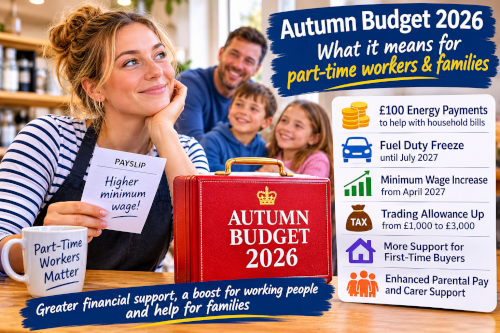
The Autumn 2026 UK Budget Statement, delivered by Chancellor John Healey on 28 October 2026, was his first. And he has introduced a range of measures that could affect your household finances, family spending and the cost of living for part time workers.
Whatever your personal situation, many families are continuing to face pressure from rising energy bills, food prices, housing costs and everyday expenses. And the Chancellor presented the Budget as an opportunity to give households some much-needed financial breathing space.
Its central message was to reduce the pressure on household budgets while supporting working people, helping first-time buyers and investing in longer-term economic stability.
However, while you might find that some of the announcements will provide welcome financial assistance, others could have implications for those of you who save money, own property or rely on particular sources of income.
So, what does the Autumn 2026 Budget actually mean for families and people working part time?
Here are the main announcements and how they could affect your household.
£100 Energy Payments To Help With Household Bills
One of the most significant announcements for families is the introduction of a £100 Household Energy Payment for eligible households.
The government intends to make these payments from January 2027, helping families manage energy costs during the winter months. In England, the payment will be available to households living in properties in Council Tax bands A to D. The property must be your main residence and you must be responsible for the Council Tax.
This is a huge scheme which is expected to benefit up to 20 million households. If you are a household that is already struggling to balance monthly budgets, an additional £100 could help towards electricity, gas and other essential household expenses.
If you live in Scotland, Wales or Northern Ireland, you will receive additional funding through your respective governments, which will decide how to provide comparable support.
Lower Energy Costs Through VAT Changes
Energy costs remain a major concern for households, particularly if you have children, larger properties or other family members who spend considerable time at home.
The Chancellor extended the temporary zero-rating of VAT on domestic electricity bills until 1st July 2027 and this measure is intended to continue reducing household electricity costs. It is estimated that this extension will take around £50 off the Ofgem annual price cap in April 2027 and for families, it provides some welcome certainty over the coming months.
More good news for you is that the government has also asked energy regulator Ofgem to remove standing charges from household gas bills by the end of 2027 or as soon as possible afterwards.
Standing charges are fixed daily costs that households pay regardless of how much gas they use and removing them could particularly benefit those of you who are in smaller households and who use relatively little gas.
Fuel Duty Freeze
Do you rely on your car or other vehicle to get to work, to take children to school, to attend appointments or visit relatives? If so, then you will be all too aware that the cost of motoring can represent a significant proportion of your monthly outgoings.
The Chancellor confirmed that the temporary fuel duty freeze will continue until 1 July 2027.
The existing temporary 5p reduction will begin to be reversed from July 2027, with rates also due to increase in line with inflation.
If you are reliant on a car – perhaps you live in a rural area where public transport options may be limited – the extension in the freeze in duty provides some additional breathing space.
It will also be helpful if you are a parent who commutes long distances and needs to travel frequently for childcare arrangements.
Bear in mind that fuel costs can still rise. This freeze is a freeze on tax rather than international fuel prices.
Minimum Wage Increases
Another important Budget announcement for those of you who are earning the National Living Wage or National Minimum Wage.
From 1 April 2027, the National Living Wage will increase by 3.9 per cent to £13.21 an hour. According to the government, this will increase the gross annual earnings of a full-time worker on the National Living Wage by approximately £910.
If you are aged 18 to 21 and are earning the National Minimum Wage, your increase is also 3.9 per cent. From £10.85 per hour to £11.27 per hour.
Depending on your situation, this could give your household budget a decent boost, making a big difference to going towards paying for childcare costs, food shopping, transport expenses and housing payments.
Increase In Trading Allowance
Have you got a side hustle? We have lots of great ideas for side hustles if you are thinking about having one to boost your bank balance.
There is good news for you, if so. At the moment, you are allowed to earn £1,000 tax free from your extra work. It was announced in the Budget statement that this tax free allowance will now be increased to £3,000, giving you a higher cushion.
It is said this will benefit up to 1.4 million people with some of you saving hundreds of pounds.
This measure will come into force in April 2027 and, as well as saving you some money, will also save you lots of time in admin because you can earn £3,000 before you need to start filling out a tax return.
More Support For First-time Buyers & Families Looking To Move House
If you are looking to get on the housing ladder, you will know that buying a property remains a significant financial challenge. This is particularly the case if you are younger adults and couples hoping to purchase their first home.
High property prices, mortgage costs and the difficulty of saving a substantial deposit have made getting onto the housing ladder increasingly difficult.
The Autumn Budget introduces several measures intended to improve access to home ownership.
- Your First Home Scheme aims to help approximately 70,000 people purchase a property. The scheme will provide equity loans to eligible first-time buyers purchasing new-build homes, helping them buy with a smaller deposit and mortgage.
- First Time Buyer ISA is due to be introduced in April 2029. This will provide another way for prospective homeowners to save towards a deposit.
- In addition, the withdrawal charge on Lifetime ISAs has been reduced to 20 per cent, helping first-time buyers who purchase properties above the existing £450,000 property price cap avoid the previous financial penalty.
- An additional £1.5 billion of funding for social and affordable housing, taking planned capital investment in this area to more than £40 billion over the next decade. This could be particularly important for families who cannot afford to buy their own home and need access to more affordable rental accommodation.
These new schemes will have eligibility requirements, of course, and the benefits will depend on where you live, the types of properties available and your financial circumstances.
More Financial Protection For Parents Taking Time Off Work
The Chancellor announced measures designed to improve parental support, particularly for people who have previously found it difficult to access paid leave.
An extension of parental pay to more than 160,000 additional parents was announced and this will include self-employed fathers and partners who have previously missed out.
This is an important development for families because, as many of you will be all too aware of, having a child can create considerable financial pressure, especially when one parent needs to take time away from work.
Changes To Savings & Property Income Taxation
So far, we have looked at Budget announcements that are (hopefully) going to give you a bit of a financial boost but, as with any Budget announcement, there are also changes that could create additional costs for some households.
From April 2027, tax rates on savings and property income will increase by two percentage points across all tax bands.
This means the rates applying to savings and property income will become:
- Basic rate: 24 per cent
- Higher rate: 44 per cent
- Additional rate: 49 per cent
The government estimates that 84 per cent of taxpayers will not see an increase in their tax bill from these changes.
However, if you are a family with substantial savings outside of tax-free accounts, or you receive rental income from investment properties, you may be affected.
For example, if you are parents who have built up savings to help children through university, to contribute towards a future house deposit or to give yourself some financial security for retirement, you might want to review how your money is held.
The good news is, the Chancellor also confirmed that the £20,000 annual Cash ISA allowance will remain available to everyone, reversing the previously proposed reduction.
Welcome news for those of you who use Cash ISAs to build savings without paying tax on the interest.
New Pension Tax Allowance
If you are receiving a pension or you are supporting retired family members, then there is some good news for you.
From April 2027, a new Pension Tax Allowance will be introduced for people above State Pension age whose total income is no higher than the value of the new State Pension.
The allowance is intended to ensure that these pensioners do not have to pay income tax on income up to that level.
The government estimates that around 500,000 pensioners will benefit during the 2027–28 tax year. Of these, approximately 290,000 are expected to pay no income tax at all, while others will receive a tapered allowance.
This could provide some reassurance to any of you who help to financially support elderly parents or relatives.
Better Protection For Unpaid Carers
If you watch the news or follow the Prime Minister on social media, if you are a carer, you will know that you are now being seen! Hopefully, there are big reforms to come further down the line but for the immediate future, the Chancellor made an important announcement regarding Carer’s Allowance.
Many families depend on unpaid carers who provide essential support to relatives with disabilities, long-term health conditions or other care needs.
However, if you are one of these carers, you will know that the rules surrounding Carer’s Allowance have historically created difficulties if you want to combine caring responsibilities with paid employment.
One particular problem has been the earnings limit. Earning slightly more than the permitted amount can risk losing your entire Carer’s Allowance entitlement. Working part time often means flexible hours and it can be difficult to work out whether or not you can accept the offer of an extra shift, for example.
The Chancellor announced reforms to the weekly earnings limit so that you will no longer automatically lose all of your benefits if you exceed the limit by a small amount.
This will encourage you to remain in work or increase your working hours without facing the same risk of losing an important source of financial support.
What Does The Budget Mean For The Overall Cost Of Living?
Will Chancellor John Healey’s Budget statement make an impact on your personal cost of living?
The government has introduced several measures that should help with household spending:
- energy payments
- extended electricity VAT relief
- a fuel duty freeze
- higher minimum wages
There are also longer-term measures intended to improve housing affordability, strengthen employment opportunities and make energy supplies more secure.
However, we are still in a cost of living crisis and you still have to contend with outgoings where there are increases in food prices, rent, mortgage payments, childcare costs and other essential expenses.
Some households will also benefit more than others, depending on your personal situation.
What You Can Do To Prepare For The Changes
When it comes to your finances, it is up to you to make sure you are receiving everything you are entitled to. And also making sure you are making your money work for you.
Some areas that you can look at are:
- Check eligibility for energy support – Do you qualify for the £100 Household Energy Payment?
- Assess your savings setup – With changes to savings income taxation coming in April 2027, if you have larger savings balances, maybe review your options. The continued £20,000 Cash ISA allowance may be particularly useful.
- Explore housing opportunities – If you are a first-time buyer, have a good look at the Your First Home Scheme and the new First Time Buyer ISA. Understanding the eligibility requirements and potential costs will help you to decide whether these schemes could support your plans.
- Make yourself aware of the changes to wages and benefits and what it can mean for you – This could mean you do not miss out on vital support.
Will Chancellor John Healey’s Autumn 2026 Budget Make A Difference To Your Household?
Lots of the measures announced are designed to improve living standards.
The £100 Household Energy Payment, extended electricity VAT relief and continued fuel duty freeze will provide some welcome assistance with essential expenses for many of you.
And if you are in a part time job earning the National Living Wage or the Minimum Wage, you will no doubt be pleased at the increase in your hourly rate. If you also happen to have a side hustle, being able to earn £3,000 tax free from April 2027 will also be a big help.
First-time buyers will now have new opportunities to explore through the Your First Home Scheme and future First Time Buyer ISA and there were also encouraging announcements for parents, pensioners and unpaid carers, suggesting that the government is attempting to address some of the financial pressures experienced by different types of households.
How these will work out with the continued rises to the cost of living remains to be seen.
If you are currently looking for part time work, whether entry level jobs or trades and professions, take a look at what’s on offer on our jobs board.